Column · @sellhouseasiswire
When It Makes Sense to Sell House As-Is
Every homeowner reaches a point where they look at their property and realize it needs more than just a fresh coat of paint. Maybe the roof is older than expected, the foundation has settled in ways that worry you, or the kitchen layout feels stuck in a previous decade. The natural instinct is to fix things up before listing, to make the home shine and attract top dollar. But that instinct is not always right. In some situations, the smarter move is to sell house as-is and walk away with a fair cash offer, no renovation stress required.
Selling a home in as-is condition means you are not promising any repairs or upgrades. The buyer takes the property exactly as it stands, with full knowledge of its quirks and flaws. For a traditional real estate agent, this can be a tough sell. Most buyers expect a move-in ready home, and agents know that a property needing work will sit longer on the market. But when you work with a cash buyer who specializes in as-is purchases, the whole dynamic shifts. You skip the listing process, skip the open houses, and skip the weeks of uncertainty.
Why Homeowners Choose This Route
There are several common scenarios where selling without making repairs makes perfect sense. The first is financial hardship. If you have lost a job, faced a medical emergency, or fallen behind on mortgage payments, the last thing you need is a home improvement project. You need cash quickly. Selling to a cash buyer means you can close in days, not months, and use the proceeds to stabilize your situation. No lender will approve a loan for a buyer on a house that needs major work, but a cash buyer does not care about that. They look at the structure, the location, and the numbers, and make an offer based on fair market value minus estimated repair costs.
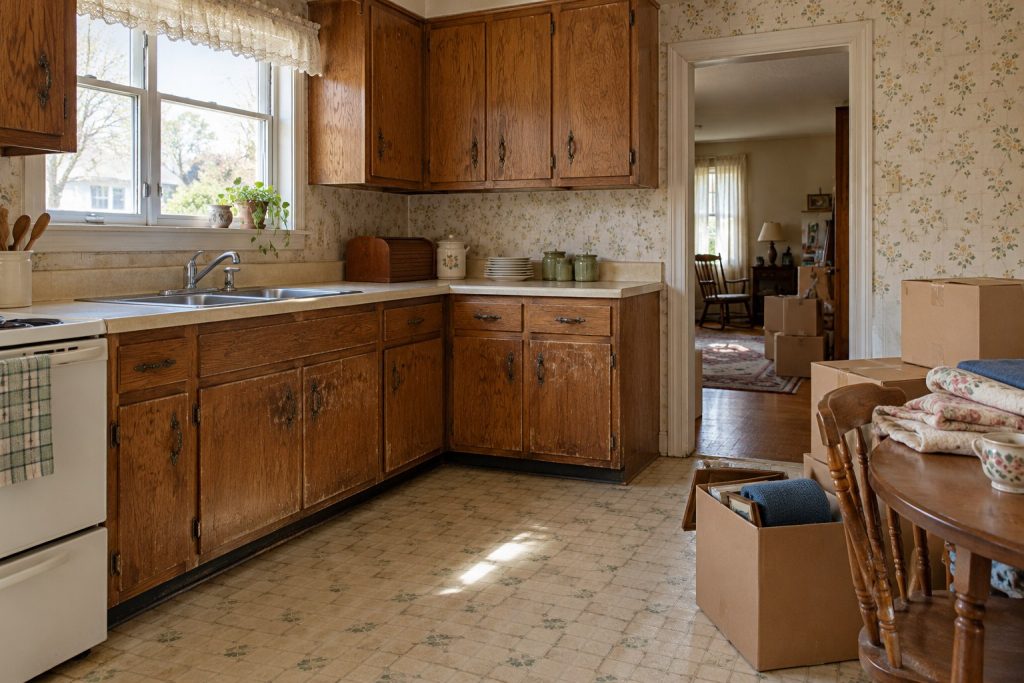
Another common situation involves inherited property. When a family member passes away, the house they leave behind is often in a state of disrepair. Maybe they lived there for decades and could not keep up with maintenance. Maybe the roof leaks, the plumbing is original, and the yard has become overgrown. You are already dealing with grief and the probate process. Taking on a full renovation or even a deep clean feels impossible. Selling as-is to a cash buyer lets you liquidate the asset quickly, split the proceeds among heirs, and move on. No need to coordinate contractors from across the country or argue over which upgrades to make.
The Hidden Costs of Fixing Up
Even if you have the time and energy to renovate, the math does not always work in your favor. A full kitchen remodel can run $20,000 or more. A new roof might cost $10,000. New flooring, painting, and landscaping add up fast. Then you have the carrying costs while the work is being done: mortgage payments, utilities, insurance, and property taxes. After all that, you list the home and pay a real estate agent commission, typically 5 to 6 percent. You might also cover closing costs like transfer taxes and title insurance. By the time you add everything up, the net proceeds from a traditional sale can be surprisingly close to a cash offer that accounts for those same repair costs up front.
There is also the matter of home inspection. In a traditional sale, a buyer will order a home inspection, and the results often lead to renegotiation. They want a credit for the old water heater, they ask for the termite damage to be treated, they demand the cracked window to be replaced. Even if you fix the place up, you can still end up negotiating on unexpected items. When you sell house as-is, you remove that entire back-and-forth. The buyer has already done their due diligence and priced their offer accordingly. No surprises, no last-minute demands.
Who Buys As-Is Properties
The buyers in this market are typically investors, house flippers, or companies that buy homes for cash. They have the capital and the expertise to handle repairs that would overwhelm a typical homeowner. They are not looking for a perfect house; they are looking for a deal that makes financial sense after they account for renovation costs, carrying costs, and their own profit margin. This is why the cash offer you receive will usually be below what you might get on the open market after repairs. But when you factor in the time, stress, and risk of a traditional sale, the gap often shrinks.
Some homeowners worry that selling as-is means selling for pennies. In reality, a reputable cash buyer will base their offer on current market data. They look at comparable sales in your neighborhood, subtract the estimated cost of repairs, and factor in their own overhead. The result is a number that reflects what the house is worth today, not what it could be worth after someone else spends months fixing it. For many sellers, that number is more than enough to cover a mortgage payoff, property lien satisfaction, moving expenses, and still leave some home equity to start the next chapter.
Dealing with Title and Legal Issues
Some properties come with complications that go beyond physical condition. There might be a property lien from an unpaid contractor, code violations from the city, or unpaid HOA dues that have accumulated over years. In a traditional sale, these issues must be resolved before closing, which can take months and cost thousands in legal fees. A cash buyer who specializes in as-is purchases often has the experience to handle these hurdles. They work with a title company that can navigate the complexities, and they may be willing to close even when there are outstanding liens or code violations, as long as the numbers still work.

If the property is tied up in the probate process, a cash buyer can also be patient there. Probate takes time, but a buyer who understands the process can wait it out and still close quickly once the court gives the green light. That is a huge relief for heirs who need to sell but cannot afford to sink money into a house they do not want.
When the Numbers Tip in Your Favor
Let us walk through a concrete example. Suppose your home needs a new roof, new HVAC, and significant foundation work. You get estimates totaling $40,000. You list it traditionally at $250,000, and it sells at $240,000 after negotiation. You pay a 6 percent commission, which is $14,400. You pay $3,000 in closing costs, $2,000 in moving expenses, and carry the mortgage for three months while it sits on the market, adding $4,500. Your net is roughly $216,000. A cash buyer offers you $210,000 as-is, closes in two weeks, and you pay zero commission and zero carrying costs. You walk away with $210,000. The difference is $6,000, but you saved months of stress and did not have to front a dime for repairs.
Now consider a different situation. If your home is in decent shape and only needs cosmetic updates, a traditional sale might net you significantly more. That is a judgment call only you can make. But if the home has major issues, or if you are facing foreclosure and need to sell fast, the as-is route often wins.
Making the Decision
Before you decide to sell house as-is, take a hard look at your timeline and your finances. If you can afford to wait and have the cash to make repairs, a traditional sale might yield a higher payout. But if you are stretched thin, if the house needs more work than you can handle, or if you simply want to avoid the headache of showings and negotiations, then an as-is cash sale is a practical solution. It is not about settling for less; it is about choosing the path that fits your current reality.

Talk to a few cash buyers before making a decision. Ask for their process, how they determine their offers, and how quickly they can close. A good buyer will be transparent about their criteria and will not pressure you. You are in control. The goal is to find a buyer who gives you a fair price and a smooth transaction, so you can move forward without looking back.
At the end of the day, real estate is about matching the property with the right buyer. Some houses are meant to be fixed up and flipped. Others are best sold as-is to a buyer who sees the potential and has the resources to act. Knowing which category your home falls into is the first step toward a successful sale.